Tethered vs Untethered EV Chargers – Quick Summary
- Tethered chargers offer a fast, hassle-free plug-in for everyday use.
- Untethered chargers give a tidier look and suit narrower driveways or side entrances.
- Weather exposure, cable length and driveway layout play a major part in choosing correctly.
- Night-rate users tend to favour tethered chargers; appearance-focused homes often prefer untethered.
- Solar PV homes usually benefit from tethered setups due to quick daytime plug-ins for Eco/Eco+ modes.
Tethered vs Untethered EV Chargers (Ireland 2026): Which Should You Choose?
The choice between tethered and untethered EV chargers is more important than most new EV owners realise. It affects your daily routine, ease of charging during bad weather, driveway safety, cable longevity, and even your chance of missing a night-rate window. And unlike cosmetic choices inside the home, this decision stays with you for years, because it affects how your charger is positioned and how you use it every day.
Irish homes vary widely — some have narrow side entrances, others have front-facing driveways, some have solar PV, and many rely heavily on night-rate tariffs. Because of this, there’s no universal “best” option. Each type solves a different problem, and the ideal choice depends entirely on your home layout and how you plan to charge.
This guide breaks down the real-world pros and cons of both types, using the experience of installers who see these setups in action across hundreds of Irish homes every year.
1. Why This Choice Matters More in 2026
EV Charging Habits Have Shifted
New EVs arriving in Ireland now have larger batteries and faster charging speeds. This means drivers interact with their charger more often and rely more on consistent timing, especially when using night-rate electricity. A setup that’s awkward during winter or slow to use with a home charger becomes frustrating quickly.
The Wrong Charger Type Creates Long-Term Nuisances
Choosing incorrectly can lead to daily inconveniences such as cables not reaching, the cable blocking a walkway, or the charger being awkwardly placed because the home layout didn’t suit the chosen style. These small issues add up over time.
Every Home Layout Is Different
What works well for a detached house in Meath may be terrible for a terraced home in Dublin, and vice versa. Tethered isn’t automatically better. Untethered isn’t automatically tidier. It depends on how you use your EV and where you park your car each night.

2. What Is a Tethered EV Charger? (Pros & Cons)
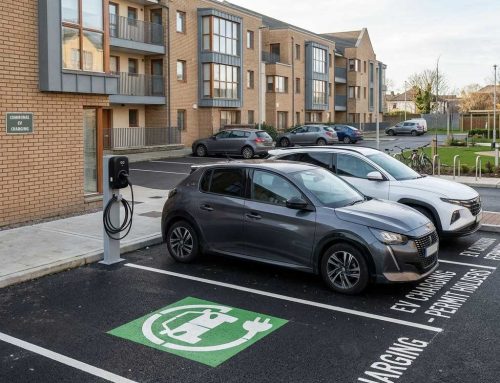
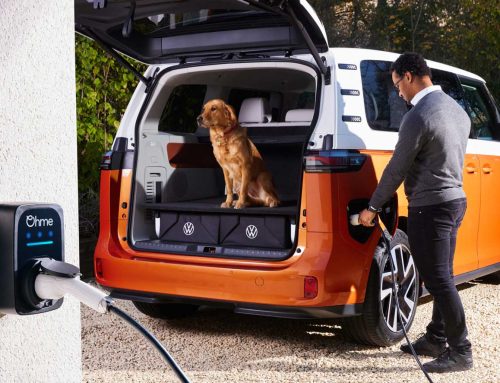
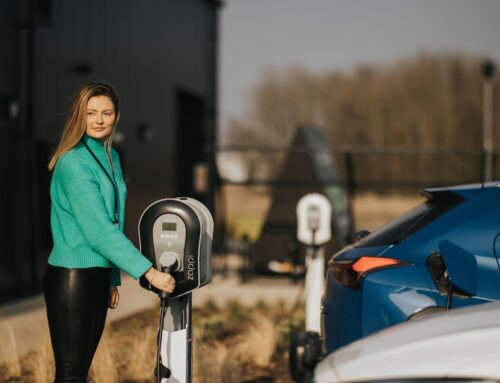
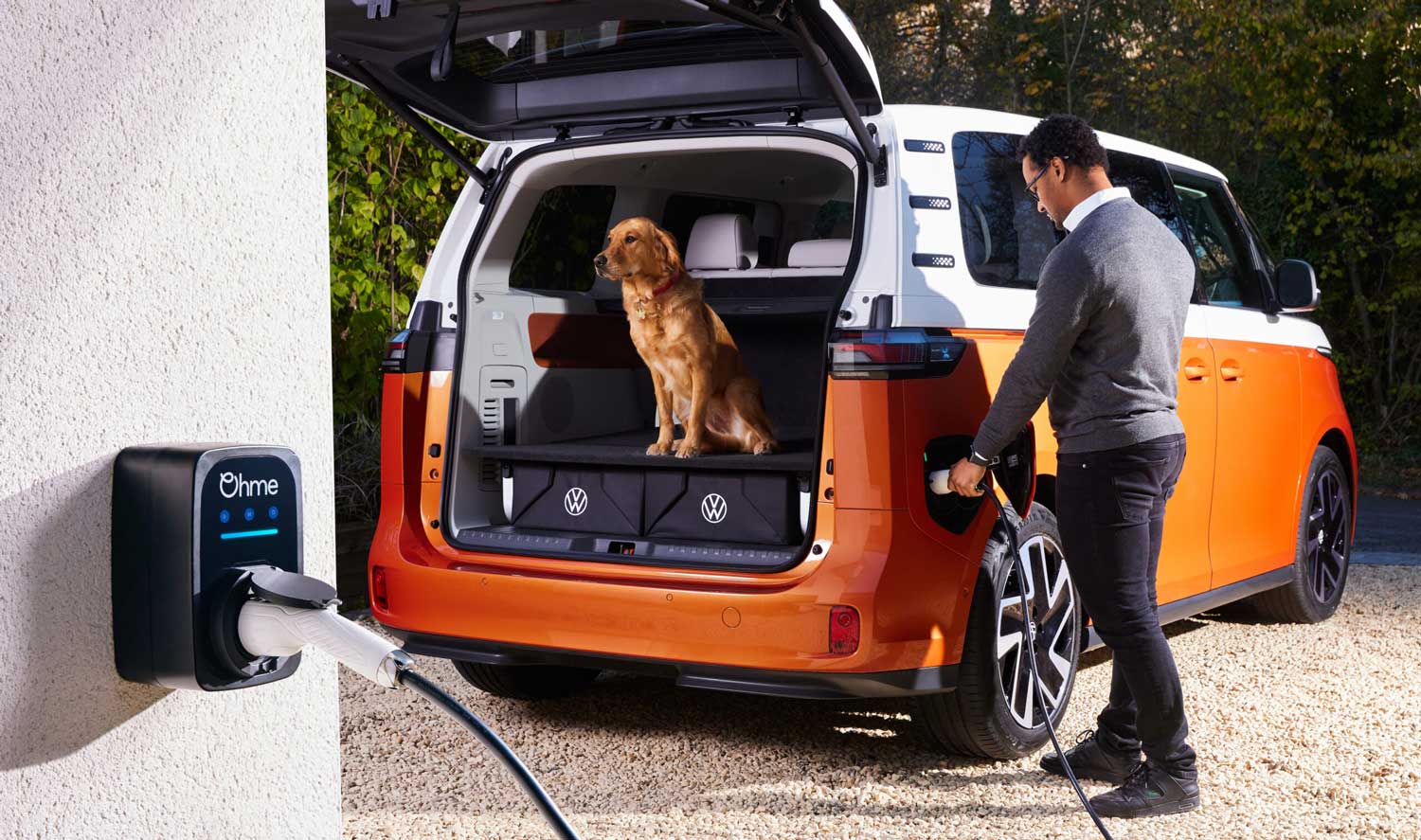
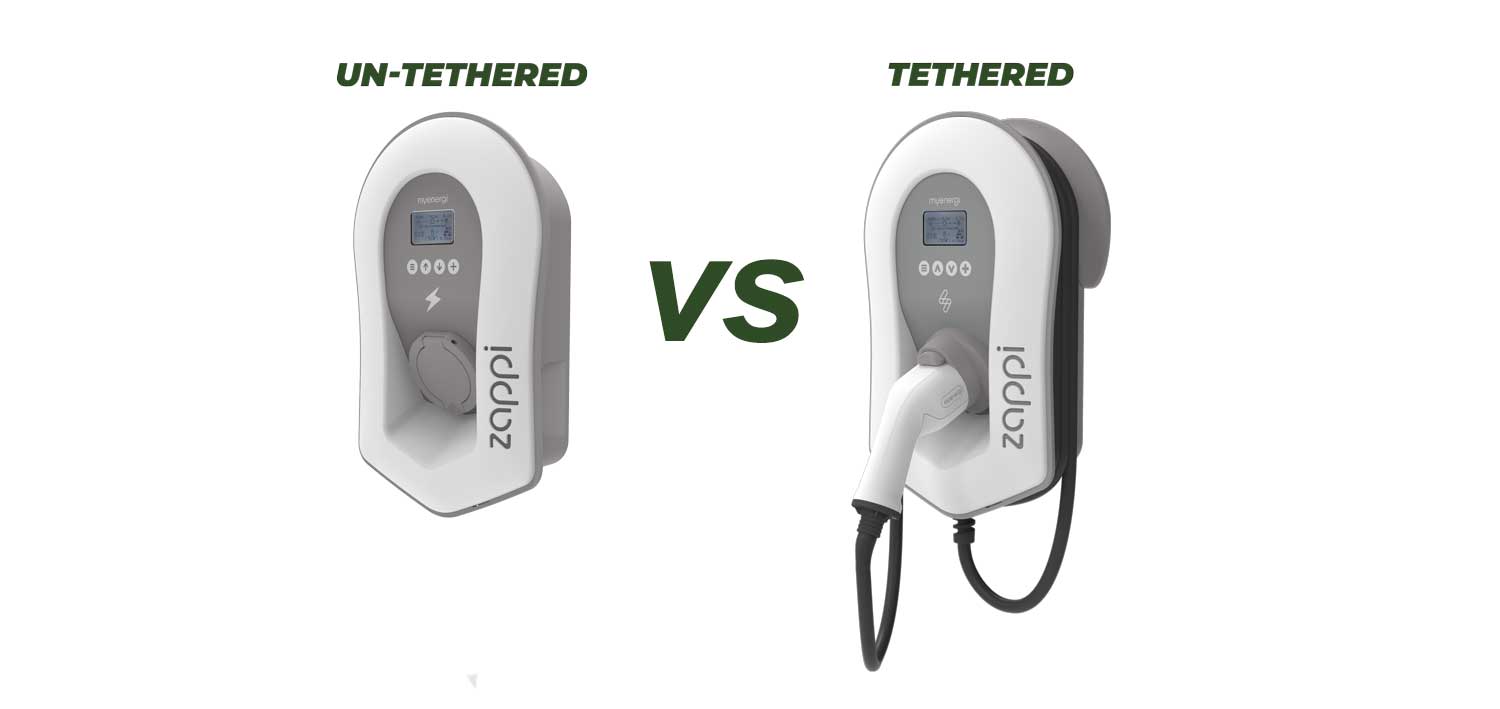
A tethered charger has a permanent cable attached, similar to a petrol pump hose for electric cars.
Advantages of Tethered Chargers
- Quick plug-in — grab the cable and plug in within seconds.
- Ideal for nightly use — great for night-rate charging routines with public chargers.
- Convenient in the rain for charging cables. — no searching for cables or handling them in bad weather.
- Protects your main cable — reduces wear on the EV’s own portable Type 2 cable.
- Excellent for solar homes — easy to plug in quickly during sunny bursts for Eco/Eco+.
Disadvantages of Tethered Chargers
- The cable is always visible on the wall.
- Not ideal for narrow side entrances, where the cable might create a trip hazard.
- In winter, the cable can stiffen and be harder to wrap neatly.
- Less minimalist appearance.
Who Should Choose Tethered?
- Night-rate users who charge daily.
- Solar PV homes where daytime plug-ins are common.
- High-mileage drivers.
- Homes with straightforward front-facing driveways.
3. What Is an Untethered EV Charger? (Pros & Cons)
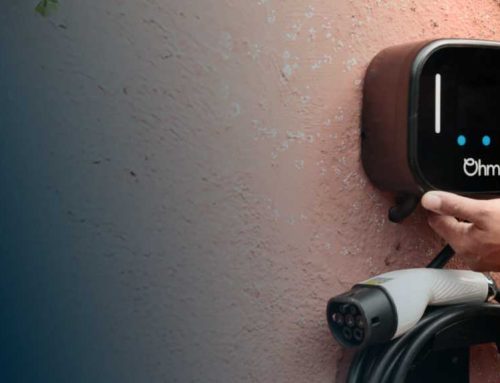
An untethered charger is socket-only. The driver plugs in their own cable each time.
Advantages of Untethered Chargers
- Clean, discreet appearance — blends into the wall when not in use.
- Great for narrow driveways — avoids a cable hanging across a walkway.
- Easy cable replacement — change cable length anytime.
- No charging cable exposed permanently to weather..
- Nothing visible for opportunistic theft.
Disadvantages of Untethered Chargers
- You must take the cable from the boot each time.
- Extra handling during rain, frost or snow.
- Cable may get wet or dirty when placed on the ground.
- Easier to forget or misplace the cable.
Who Should Choose Untethered?
- Homes with side entrances or footpaths beside the charger.
- Houses focused on appearance and minimalism.
- Drivers who charge their electric cars occasionally rather than nightly.
- Properties with limited wall space.
4. Driveway Layout: The Most Overlooked Factor
Driveway geometry is one of the biggest deciding factors, yet most buyers overlook it.
Front-Facing Driveway
Tethered nearly always works best. It avoids unnecessary hassle and makes nightly charging easy.
Side Entrance / Pathway Wall
Untethered is usually safer. A tethered cable can block or stretch across a walkway.
Narrow Driveways
Untethered prevents accidental dragging of the cable across the car or ground.
Detached Garage / Rear Parking
Tethered may work well with a long 7.5m–10m cable, depending on inlet location.
5. Weather Exposure in Ireland
Winter Cable Stiffness
Cold weather stiffens rubber cables. Tethered cables left hanging outside may become harder to coil or wrap. Untethered cables stored indoors avoid this problem.
Rain and Daily Handling
Tethered avoids dropping the cable on wet ground. Untethered avoids leaving a permanently wet cable on the wall.
Frost and Early-Morning Charging
Tethered is easier to use during frosty mornings — simply pull the charging cable and plug in.

6. Security & Theft Considerations
While theft of EV charging equipment is rare in Ireland, it can happen in shared parking areas or exposed driveways.
Tethered Security
The cable is visible, though usually low risk.
Untethered Security
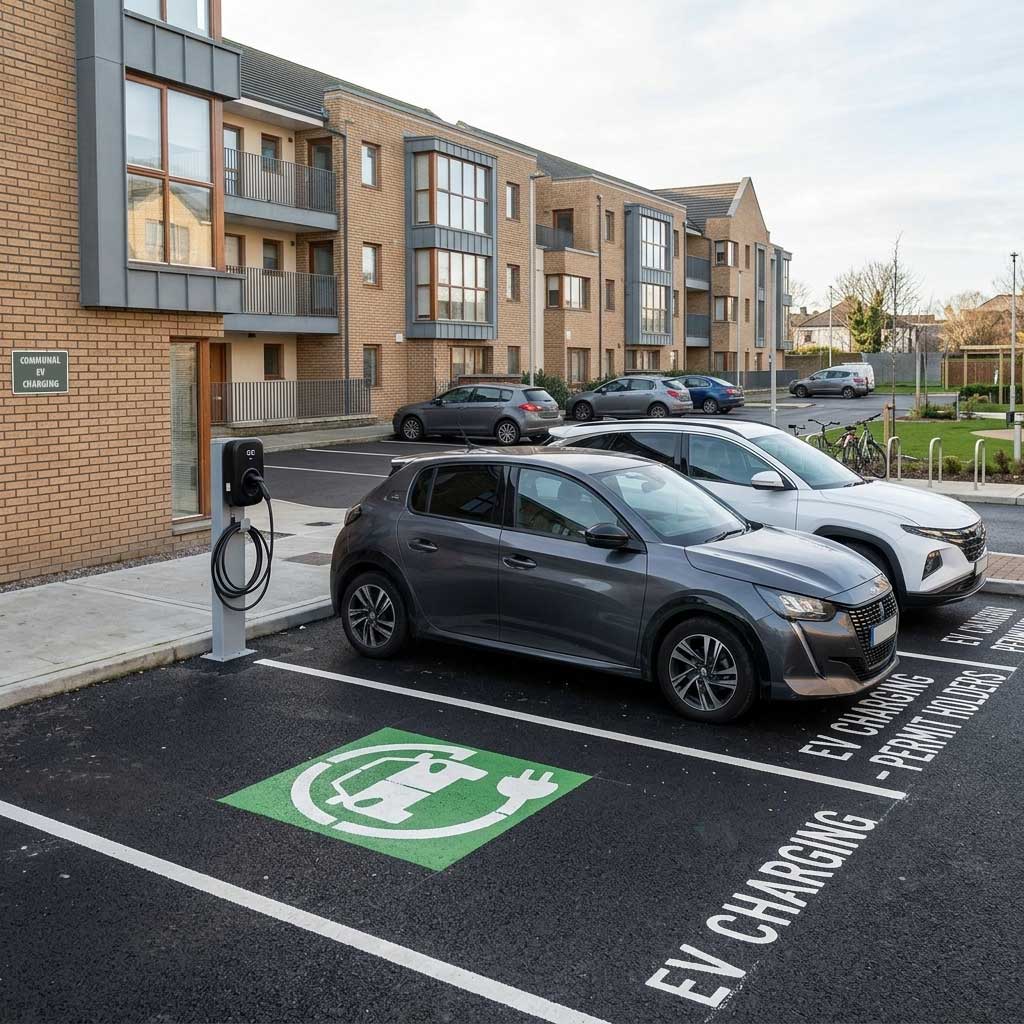
Nothing visible to steal. The charging cable stays indoors until needed. Best option for apartment spaces or communal car parks.
7. Cable Length, Car Inlet Position & Daily Use Patterns
Different EVs have different inlet locations:
- Tesla: left-hand rear
- VW ID Series: right-hand rear
- Kia/Hyundai: front-right
- Nissan Leaf: front centre
Tethered Limitations
You must choose the correct cable length at installation time. Too short? You’ll struggle. Too long? It drags.
Untethered Flexibility
You can buy different cable lengths anytime, making it future-proof if you change EV brand.
8. Night-Rate Charging: Which Works Best?
Tethered: Best for Night-Rate Users
Fewer steps, quicker connection, and more consistent charging. Helps avoid missed off-peak windows.
Untethered: More Steps = Higher Chance of Delays
If you need to fetch the cable from the boot late at night in bad weather, you’re more likely to skip or delay charging.
9. Solar PV Homes: Which Type Works Better?
Tethered: Best for Solar EV Charging
Quick plug-in makes Eco/Eco+ more effective. You can react to midday sunshine without needing to gather cables.
Untethered Works for Occasional Solar Use
But less ideal for homes wanting to maximise every surplus watt.
10. Maintenance, Durability & Everyday Practicalities
| Features of tethered and untethered chargers. | Tethered Charger | Untethered Charger |
|---|---|---|
| Cable Exposure | Cable remains outdoors and exposed to weather year-round. | Cable is stored indoors and only brought out when needed. |
| Maintenance | The connector must be cleaned regularly as part of normal upkeep. | Type 2 port and cable require periodic inspections. |
| Cable Wear | Daily wrapping increases wear on the insulation and strain-relief. | Indoor storage reduces cable wear and extends lifespan. |
| Security | Visible cable; low risk but present. | No permanent cable visible; lower theft risk. |
| Ease of Use | Fastest plug-in; ideal for nightly charging and night-rate users. | More steps each time; better for occasional use. |
| Aesthetic | The charging cable is always visible on the wall. | Cleaner, minimal appearance when not in use. |
11. Real-World Scenarios: Which Should You Choose?
Scenario A — High Mileage / Night-Rate User
Best choice: Tethered
Scenario B — Narrow Driveway or Side Path
Best choice: Untethered
Scenario C — Solar PV Home
Best choice: Tethered
Scenario D — Appearance-Focused Home
Best choice: Untethered
Scenario E — Apartment or Shared Parking
Best choice: Untethered
12. Quick Buyer Checklist
- Do you typically charge fees for staying overnight?→ Tethered
- The charger is installed as a fixed unit that runs along a pathway. → Untethered
- Your main priority is to find the fastest method for charging your device. → Tethered
- The wall requires a clean appearance without any visible cables. → Untethered
- The location of your property with solar PV systems makes a tethered home charger the best option for you. → Tethered
- Multiple drivers operate the electric vehicle at your location. → Tethered
- The system requires adaptable cable lengths for operation. → Untethered
13. Final Verdict
The two charger types deliver outstanding performance, but they serve different purposes for home use based on charging habits. The selection between these two chargers depends on your driveway design and weather conditions your charging frequency, and your electricity usage patterns.
A tethered charger provides users with the most convenient charging experience. The charger works best for drivers who need to charge their vehicles every night and who follow off-peak schedules and want to charge their vehicles using solar power during the day.
An untethered charger works best for homes that need to maintain appearance and have restricted space and charger placement near walkways or side entrances. The charger features a simple design which enables users to select from multiple cable size options.
The team members will help you pick a suitable charger which fits your home’s needs. Our team evaluates your driveway design and EV model and charging schedule, and electricity tariff details to select the best charger for your future needs.
Contact our EV charger installers team, get a quote today, and we’ll help advise on the ideal charger type for your home.
Related search keywords: tethered ev charger, untethered ev charger, tethered vs untethered ev chargers, tethered vs untethered chargers, home ev charger ireland, ev home charger, fixed cable ev charger, detachable cable ev charger, tethered wallbox, untethered wallbox, cable permanently attached ev charger, buy ev charging cable separately, ev charger with cable, ev charger without cable, difference between tethered and untethered, home ev charging ireland, ev charger installation ireland, charge your ev at home, compatible type 2 cable, type 2 charging cable, fixed cable vs socketed charger, socketed ev charger, best home ev charger ireland, choosing an ev charger, solar compatible ev charger, night rate ev charging ireland, driveway layout ev charger, ev charger cable options, ev charger buyer guide ireland, ev charger types explained, irish homeowners ev charger guide, charging cable options for ev, which ev charger is best, wall mounted ev charger ireland