Table of Contents
-
- Why This Question Comes Up So Often – EV Charging
- EV Chargers – The Basics: What 7kW and 22kW Actually Mean
- Charger Your EV – What Most Irish Homes Can Actually Support
- The EV Itself Is Often the Limiting Factor
- Charging Speed vs Real Life Charging Needs – Home EV Chargers
- Charging Speed vs Real Life Charging Needs
- When 22kW Might Make Sense
- The Hidden Costs of Chasing 22kW
- Night-Rate Charging: Why 7kW Usually Wins
- Solar Homes: Power Level vs Practical Use
- How Installers Decide: The Real Checklist
- The Short Answer Most People Don’t Want — But Need
7kW vs 22kW EV charger Ireland – If you’ve found yourself comparing 7kW vs 22kW EV chargers in Ireland, you’re probably close to requesting a quote — and trying to avoid getting it wrong.
The assumption most people start with is simple: 22kW must be better. Faster charging sounds like an obvious upgrade, especially when you’re spending money on an installation that’s meant to last years.
The reality in Irish homes is more complicated.
In practice, many homeowners cannot use 22kW charging, even if they install a charger rated for it (more info on: – Zappi Charger Installers Dublin). Others could technically support it but would see no real-world benefit. And some end up paying for upgrades that never pay back in terms of charging solutions (more info on: – EV Chargers Ireland).
This guide explains the difference in plain terms — not specs — and shows how installers decide what actually makes sense for a typical Irish house.
Why This Question Comes Up So Often – EV Charging
Search data and enquiry patterns show that people looking up 7kW vs 22kW are usually at the same stage:
- They’ve decided to install a home EV charger
- They’re comparing quotes or charger models
- They want to future-proof, but not overspend
Unfortunately, most online explanations focus on theoretical maximums, not what works in real Irish homes with real electrical limits.
That gap is where costly mistakes happen.
EV Chargers – The Basics: What 7kW and 22kW Actually Mean
Before looking at what you can install, it helps to clarify what these numbers represent, especially when considering electric vehicle charging solutions.
7kW Chargers
- Designed for a single-phase electrical supply
- Standard for the vast majority of Irish homes
- Compatible with almost every EV sold in Ireland
- Can fully recharge most EVs overnight on night-rate electricity
22kW Chargers
- Require a three-phase electrical supply
- Often marketed as “future-proof” or “fast home charging” (more info on: – The Future of EV Home Charging)
- Only deliver full speed if the car can accept 22kW AC
- Rarely usable at full power in residential settings
On paper, 22kW looks three times faster. In reality, it usually isn’t.
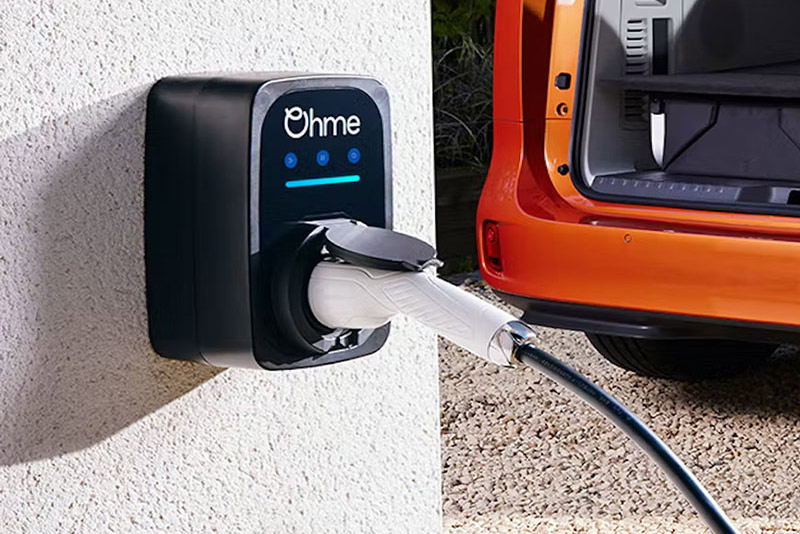
Charger Your EV – What Most Irish Homes Can Actually Support
This is the most important section — and the one most guides gloss over.
Single-Phase vs Three-Phase Supply
- Most Irish homes are single-phase
- A standard domestic supply comfortably supports 7kW charging
- Three-phase supply is uncommon outside:
- Farms can benefit from installing electric vehicle charge points for their electric cars (more info on: – Commercial EV charger installation).
- Large rural properties
- Commercial or mixed-use buildings
Upgrading a typical home to three-phase is:
- Expensive
- Not always approved for electric vehicle charge points.
- Often unnecessary
If your house is single-phase, installing a 22kW charger does not make it charge at 22kW.
The EV Itself Is Often the Limiting Factor
Even if a home could support higher power, many EVs cannot.
Most EVs sold in Ireland:
- Max out at 7kW or 11kW AC charging
- Only accept higher speeds on DC fast chargers, not home chargers
This means:
- A 22kW charger may still charge your car at 7kW
- You pay more, but gain nothing day to day
This is one of the most common frustrations we hear after installation.
Charging Speed vs. Real-Life Charging Needs – Home EV Chargers
The key question isn’t “how fast can it charge?”
It’s “does it finish charging when I need it to?”
Typical Irish Use Case
- Car arrives home between 5–7pm
- Charging is scheduled on the night-rate electricity
- Battery topped up before morning
For most households with electric cars:
- A 7kW charger easily meets this need
- Even with colder winter batteries
- Even with longer commutes
If your car is full by morning, faster charging adds no value.
When 22kW Might Make Sense
There are limited scenarios where higher-power charging is justified:
- Homes with existing three-phase supply
- EVs that genuinely support 11–22kW AC
- Very high daily mileage with limited overnight windows
- Shared or semi-commercial residential setups
Even then, the benefit of electric vehicle charging solutions should be calculated — not assumed.
The Hidden Costs of Chasing 22kW
This is where people often get stung.
Higher-power charging can involve:
- Electrical supply upgrades
- Fuse board modifications
- Thicker cabling and longer installation time
- More complex load management
- Higher upfront cost with little return
For many homes, that money is better spent on:
- Load balancing
- Solar integration
- Smarter scheduling
- Better cable placement for optimal electric car charger accessibility.
- A charger that’s easier to live with daily

Night-Rate Charging: Why 7kW Usually Wins
Night-rate electricity is where Irish homeowners save the most.
A 7kW charger:
- Fits perfectly into night-rate windows
- Charges steadily without stressing the supply
- Works well with load balancing
- Is predictable and reliable
A higher-rated charger doesn’t shorten the night — it just tries to draw more power in the same window.
Solar Homes: Power Level vs Practical Use
Solar changes the equation, but not in the way many expect.
- Solar output is variable
- Most homes generate enough power to charge your EV efficiently. small bursts, not sustained high output
- A charger that reacts smoothly to surplus energy matters more than raw power
Again, usability beats headline numbers when it comes to electric vehicle charging..
How Installers Decide: The Real Checklist
When assessing a home, power rating is only one factor in the decision.
We look at:
- Electrical supply type
- EV onboard charger capability
- Daily mileage
- Night-rate window length
- Existing household loads
- Future EV plans include expanding public charging infrastructure (more info on: – EV Public Charging).
- Budget vs real benefit
In most cases, that process points clearly to 7kW.
The Short Answer Most People Don’t Want — But Need
For the majority of Irish homes in 2026:
- 7kW is the right choice
- 22kW is unnecessary, unusable, or unjustified for typical electric car charging times.
- Faster isn’t better if you can’t use it
Choosing correctly means selecting the right level 2 charger for your needs.
- Lower installation costs can make electric vehicle charging more accessible.
- Fewer electrical complications
- Reliable overnight charging
- No regrets later
Final Thought: Avoid the Expensive Mistake
If you’re comparing 7kW vs 22kW, you’re doing the right thing by checking before committing.
- The biggest mistake isn’t choosing 7kW.
- It’s paying for 22kW and never being able to use it.
A proper assessment will tell you quickly what makes sense for your home — and save you from chasing power you don’t need for your electric car (more info on: – Types Of Electric Cars Explained).
Best EV Charger Location on Your Home – need to know – read our latest blog post