

When people buy an electric vehicle, the charger tends to be an afterthought. You pick your car, sort the finance, get the insurance — and then someone mentions you’ll need a home charger installed. From there, most of the research goes into which unit to buy. Speed, brand, smart features, price. Reasonable things to focus on.
But the question that catches a surprising number of homeowners off guard is a simpler one: where does it actually go?
It sounds straightforward. In reality, the location of your EV charger has a direct bearing on what you’ll pay for installation, how convenient it is to use day to day, how long the unit lasts, and — for anyone hoping to claim the SEAI grant — whether you qualify at all. Getting it wrong isn’t a disaster, but it’s an expensive inconvenience. Getting it right from the start makes everything easier.
Table of Contents
The Location and Cost Connection
Here’s something installers see constantly: a homeowner has picked a charger, picked a spot, and only then discovered that getting cable from the fuse board to that spot involves running through two walls, under a driveway, and across a courtyard. The charger itself was reasonably priced. The installation was not.
The cable run between your home’s fuse board — sometimes called the consumer unit — and the charger is the main variable driving installation cost (More info on: Car Charger Installation Cost ). Short run, straightforward route: the job is clean and relatively simple. Long run, awkward route through solid walls or under ground: costs climb fast.
Most Irish homes have the fuse board in a hallway, utility room, or garage. If your car parks near any of those, you’re in a good starting position. If there’s distance and complexity between the board and where you want the charger, that’s worth knowing before you commit.
A proper site survey from a qualified installer will flesh all of this out before work begins. It’s the step most worth doing early.

What the SEAI Grant Actually Requires
The SEAI home charger grant offers up to €300 towards the purchase and installation of a home charging unit. It’s not a huge sum, but it’s worth having — and the eligibility rules have a direct impact on where your charger can legally be placed to qualify.
The two location-related requirements are these: the EV must park on off-street parking connected to the home, and the charger itself must be wired back to the home’s fuse board. The SEAI confirms the property using your MPRN number, which appears on your electricity bill.
There’s also a rule that trips people up regularly — no work can start before the SEAI issues a Letter of Offer. If installation begins before that letter arrives, the cost becomes ineligible. So your location needs to be decided before you apply, not after.
Homes where the car parks entirely on a public road will likely not qualify (More info on: Best Electric Car Home Charger ) . And chargers wired to a separate outbuilding supply rather than the main home board can also cause problems. Worth getting clarity on this before anything else.
Where People Actually Put Them
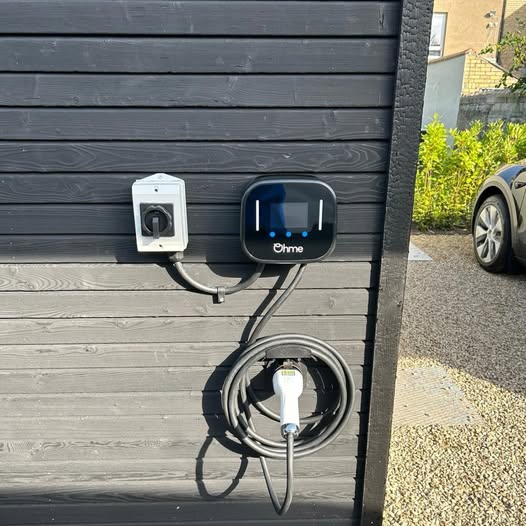
Garage walls are the most common installation point in Ireland, and the reasoning is straightforward. Garages are sheltered, the walls are solid, and the fuse board is often nearby. Interior or exterior garage wall — both work well. If your car parks at or near a garage, start here.
Gable and side walls are the next most popular option, particularly on detached and semi-detached properties where the driveway runs down the side of the house. Often, a reasonable cable run keeps the unit out of direct street view, and tends to work well structurally. A solid choice when a garage isn’t in the picture.
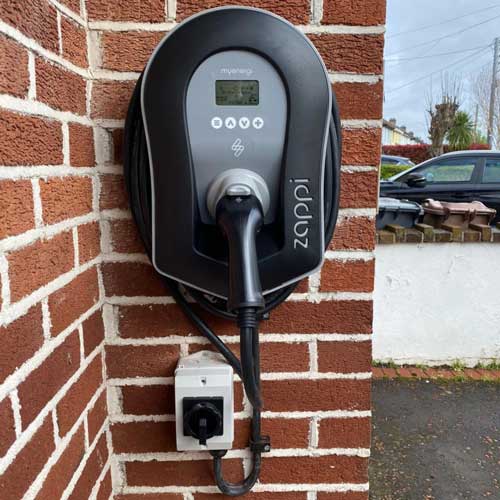
Front walls facing the driveway come up regularly on terraced houses and some semis, where side access simply doesn’t exist. The charger is right where you need it, which is convenient, though it’s more exposed to weather and more visible. Quality chargers are rated for Irish conditions, so rain isn’t the concern — longevity in a fully exposed position is a mild consideration worth weighing if a slightly more sheltered alternative exists.
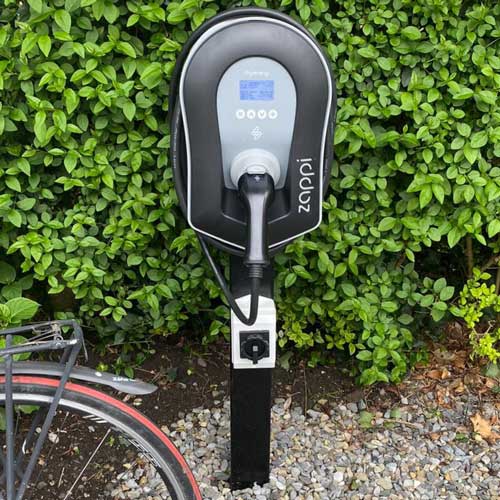
Outbuildings and garden walls occasionally come up as options, usually because no better alternative seems available. The issue is the underground cabling required to bring power from the main home’s fuse board to a detached structure. That groundwork adds meaningfully to cost, and there can be complications around SEAI eligibility depending on how the outbuilding is supplied. Worth exploring other options first.
Apartments and multi-unit properties are a category of their own. Shared parking, management company permissions, and grant eligibility all become more complicated. Individual installations aren’t always possible, and communal charging solutions — more commonly associated with business installations — are increasingly being looked at for apartment settings.
Things to Check Before You Decide
Once you have a location in mind, a few practical checks are worth doing before you finalise anything.
Cable reach matters more than people expect. Most home charger cables run to around five to seven metres. If the charger is on one wall but the car’s charge port ends up on the far side of the vehicle, you may find yourself stretching further than is comfortable — or creating a cable across a pathway that becomes a trip hazard.
Wall suitability is another one for the installer to confirm, but it’s worth knowing that solid masonry is the easiest surface to work with. Timber cladding, hollow walls, and unusual finishes can all be accommodated but may affect how the unit is mounted.
Specific guidelines govern separation from gas meters, water pipes, and other utilities. A qualified installer will know the requirements — just flag anything visible in the area you’re considering.
And finally, shelter. All decent chargers handle Irish weather. But given the choice between a fully exposed position and one with even modest protection from a roof overhang or eaves, the sheltered spot is the better long-term option.
One Answer Doesn’t Fit Every Home
The best location for an EV charger on your home is genuinely specific to your property. The factors above will narrow it down considerably, but the only way to get a definitive answer — along with an accurate installation cost — is to have a qualified installer assess the site in person.
If you’re in Ireland and at the point of making this decision, get in touch for a free consultation. A quick survey now saves a lot of second-guessing later.
Do You Need to Upgrade Your Fuse Board for an EV Charger in Ireland? Read our latest blog for full details