1. Why This Is the Question Everyone Asks First
Which EV charger is best for my home? Almost every homeowner who contacts us about an EV charger starts with the same question — which EV charger is best for my home? People have a right to ask this question, but it leads to numerous misunderstandings.
Spend ten minutes online, and you’ll see completely different answers depending on who’s writing the article. Some push brand names. The focus of some users is on how quickly their devices can charge. The specifications considered important do not influence the charger’s performance after installation or during normal use.
The situation has a straightforward nature. Every Irish home requires a different EV charger because there exists no single best option for all situations. The perfect driveway solution for one location will not work well in other driveways because it may become too much or inappropriate for their needs. The selection process depends on your home design and your charging strategy and your electricity distribution system, instead of any marketing feature.
The document provides homeowners planning to install EV chargers in 2026 with straightforward installation guidance, free from promotional content. It demonstrates how installers choose suitable solutions for real residential installations using the same evaluation process we apply when selecting chargers.
2. Home EV Charger – How You Actually Use Your EV Matters More Than You Think
Once the home layout is understood, the next question is how the electric vehicle is used day to day. Multiple “best charger” lists fail to deliver because they base their recommendations on a single charging method, which does not apply to all users.
People in various households use their chargers differently. Some charge every night without thinking about it. Others only plug in once or twice a week. Some rely heavily on night-rate electricity, while others make use of solar panels and daytime charging. These habits determine which charger functions matter and which features are never touched.
An EV owner covering short daily commutes may only ever need a few hours of charging overnight. High-mileage drivers often return home with a low battery and depend on reliable nightly charging to keep their routine running smoothly. For these users, consistency and ease of use matter more than advanced settings.
It also matters who is plugging in the car. In households with multiple drivers, the charger needs to be simple and forgiving. Systems that rely on remembering cables, apps, or complex settings tend to work for one careful user but fall apart when shared.
Choosing a charger that fits how you already live makes charging automatic rather than something you have to manage.

3. Charging Speed: Why Faster Isn’t Always Better
Many people assume that a higher-powered charger will automatically give better results. In reality, most Irish homes don’t benefit from the fastest chargers on the market.
The majority of houses in Ireland have a single-phase electrical supply. For these homes, a 7kW charger already operates at the maximum usable speed without requiring electrical upgrades. Installing a more powerful unit does not make charging faster if the home cannot support it.
The car itself is another limiting factor. Many EVs sold in Ireland cannot accept more than 7kW on AC charging, regardless of the charger’s capability. Paying extra for higher power often delivers no real-world benefit.
What matters most is not headline charging speed, but whether the charger can reliably fill the battery within your normal charging window — particularly overnight. For most households, a well-configured 7kW charger achieves this without issue.
4. Night-Rate Electricity: A Major Factor for Irish Homes
Many homeowners choose home charging to take advantage of cheaper night-rate electricity. While lower tariffs make a big difference, the charger must work smoothly and predictably during those hours.
If a charger is awkward to use or easy to forget, off-peak opportunities are missed. Each missed session quietly increases running costs without obvious warning.
This is why simplicity matters. Chargers that start reliably, connect quickly, and manage schedules accurately are far more valuable than those with long feature lists.
In winter, timing becomes even more important. Cold batteries take longer to begin charging, and relying on the car’s internal timer often leads to errors. In practice, chargers that control scheduling directly are far more dependable.
5. Solar Panels Change the Equation
Homes with solar PV use charging differently. Instead of relying only on night-rate electricity, they benefit from capturing surplus energy whenever it appears during the day.
In these homes, convenience becomes critical. If plugging in requires effort, solar charging opportunities are often missed, even when energy is available.
Chargers that adapt naturally to changing solar output work best — but only if people actually use them during daylight hours. Features alone do not deliver savings; behaviour does.
For solar homes, the best charger is the one that fits into daily life without friction.
6. Cable Type, Length and Everyday Practicality
Small physical details can cause long-term frustration. A tidy installation can quickly become awkward if the cable length does not suit where the car actually parks.
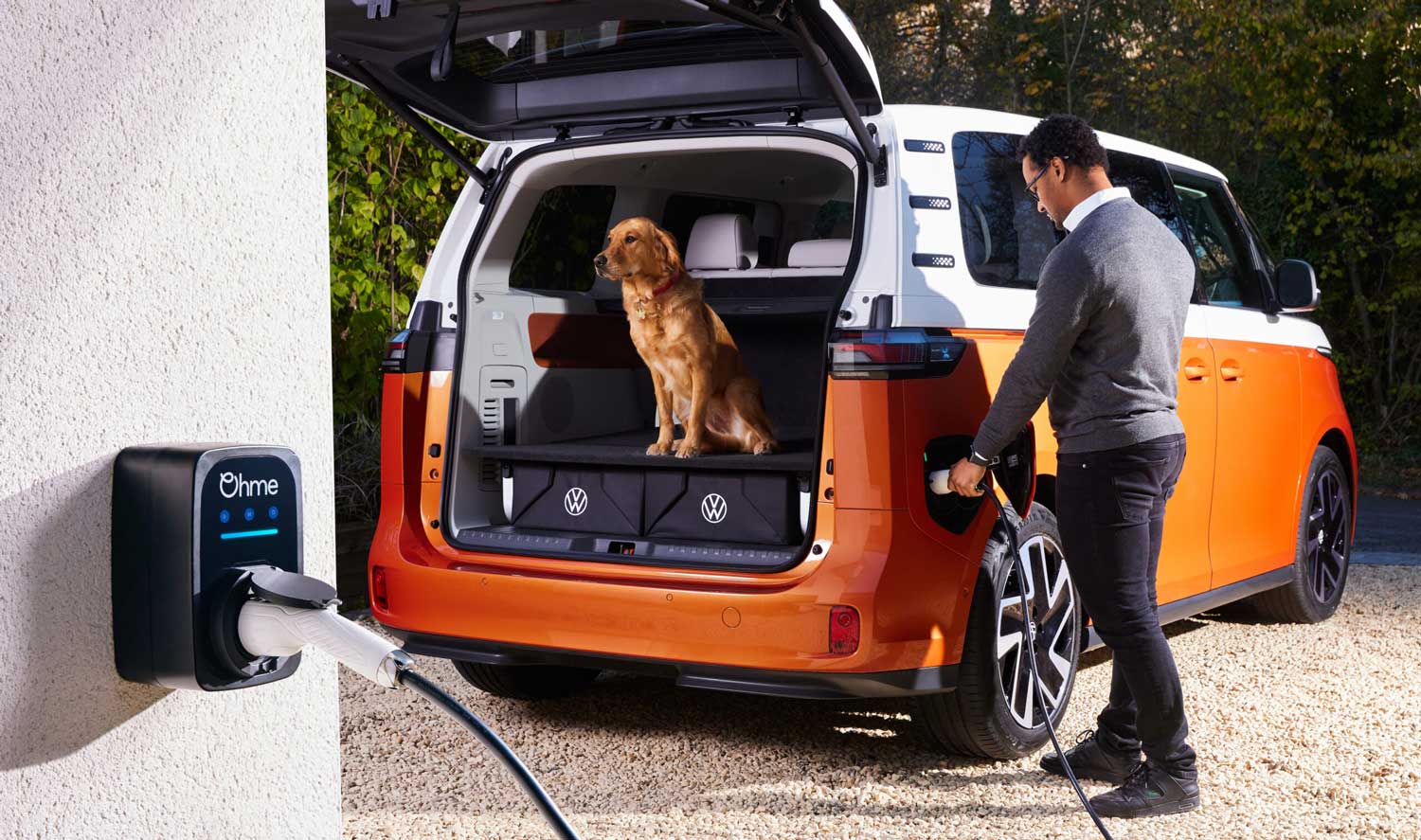
Different EVs have charging ports in different locations — front, rear, left or right. If the cable barely reaches, daily charging becomes annoying. If it is far too long, it drags and wears prematurely.
This is why installers always consider parking position before finalising cable choice and charger location. Poor alignment does not stop charging, but it quietly reduces satisfaction over time.
A good setup allows you to park, plug in, and walk away without adjusting the car or handling excess cable.
7. Weather, Durability and Irish Conditions
Irish weather places constant stress on outdoor chargers. Wind, rain and frost slowly affect cables, seals and enclosures.
Over time, small differences in build quality become noticeable. Cables left outdoors stiffen faster. Poor sealing allows moisture to creep in. Chargers that appear similar on paper age very differently in real conditions.
Reliability in wet, cold weather matters more than specifications that rarely affect daily use.

8. Future-Proofing Without Overpaying
Many homeowners worry about choosing a charger that may become outdated. While future-proofing is sensible, it is easy to overspend on features that may never be used.
Most homes do not need the most powerful charger available. What matters more is flexibility — the ability to manage loads, adapt to changing routines, and integrate with existing energy setups.
Chargers that balance power intelligently often age better than those built purely around maximum output.
9. So, Which EV Charger Is Best for Your Home?
The best EV charger in 2026 is not defined by branding or specifications. It is the charger that fits your driveway, matches your daily routine, works smoothly with your electricity tariff, and requires minimal effort to use.
When everything lines up, charging becomes a background task rather than a daily consideration. That quiet reliability is what most homeowners actually want.
Instead of choosing a model online first, having your space assessed leads to advice that reflects real usage rather than assumptions.
Choose once, choose correctly, and you save time, reduce costs, avoid frustration, and end up with a charger that simply works — year after year.
Ever wondered about 7kW vs 22kW EV chargers?…….Read our latest blog post for full details