


Table of Contents
- Why cable length matters more than people expect
- The cable lengths most Irish homeowners usually choose
- The charger location often decides the cable length
- Charging port position changes everything
- Tethered vs untethered chargers and why it matters here
- The mistakes people make when choosing cable length
One of the more common things we hear on surveys isn’t about charger brand or charging speed. It’s usually something much simpler.
“Will the cable actually reach the car properly?”
That question tends to come up a bit later in the conversation, often after the homeowner has spent time comparing chargers, grants, apps and quotes. Fair enough. Most people assume cable length is a minor detail. In practice, it can make more of a difference to daily use than some of the smart features people get hung up on.
If the cable is too short, charging becomes awkward very quickly. The car has to be parked in one exact spot. One vehicle might fit fine, but the next one doesn’t. You end up stretching the cable, dragging it across paving, or parking at an angle just to make it work. None of that feels good after paying for a proper home setup.
That’s why EV charger cable length in Ireland is worth thinking about before installation, not after it, especially for home chargers. The right cable length depends on where the charger is going, where the car normally sits, and where the charging port is on the vehicle. There isn’t one perfect answer for every house.
Why cable length matters more than people expect
A lot of homeowners picture the charger going neatly on the wall, the cable looping onto a hook, and that being the end of it. But once the charger is actually in use, the question becomes much more practical: can you plug in easily every evening without thinking about it?
That’s the real test for the electric car charging setup.
A charger can be excellent on paper and still be annoying to live with if the cable is wrong for the driveway. We’ve seen installs where the charger was mounted in a tidy, logical spot from an electrical point of view, only for the homeowner to realise the cable barely reached the charging port unless the car was reversed into the exact same place every single night.
That gets old quickly.
The most common complaints are predictable enough:
- The cable only just reaches the socket for the home charger.
- the car has to be parked awkwardly
- the cable ends up stretched across a walkway
- someone in the house trips over it
- the extra tension makes the setup feel wrong
It’s not usually a dramatic failure of the charging station. It’s just a small inconvenience with electric cars, repeated over and over. And that’s the sort of thing that makes people regret small decisions.
Cable length should really be treated as part of installation planning, not as an afterthought.

The cable lengths most Irish homeowners usually choose
For home EV charging setups in Ireland, the most common tethered cable lengths are 5 metres and 7 metres, with some chargers available in longer options depending on the model.
That doesn’t mean one type of EV charging cable is “best” and the other isn’t. It depends on the house.
5 metre cables
A 5 metre tethered EV charger cable is often enough where:
- the charger is mounted close to the parking position
- the driveway is compact
- the charging port is on the side of the car nearest the charger
- there’s only one obvious way the car will be parked
These work well on fairly straightforward driveways. If the charger is being fitted on a front wall or a pillar close to the vehicle, 5 metres can be perfectly fine. It also tends to look tidier because you’re not dealing with more cable than you need.
That said, 5 metres can become limiting if the household changes vehicle later on or if there’s any variation in where the car ends up parked.
7 metre cables
A 7 metre home EV charger cable gives you more flexibility. This usually suits homes where:
- the charger is going on the side wall of the house
- the parking space is deeper or wider
- more than one EV may use the charger over time
- the charging port location isn’t ideal
We often lean toward 7 metres where there’s any doubt. Not always, but often. A slightly longer cable is easier to live with than one that only just reaches on a good day.
Some homeowners worry that a longer tethered EV charger cable will look messy. It can if the electric car cable is left hanging badly. But if the charger is installed properly with sensible cable management, it’s usually not a problem.
The charger location often decides the cable length
This is the part people don’t always see coming.
The best place to install the charger electrically is not always the best place to use it from day to day.
In a lot of Irish homes, the easiest place to pick up power is near the fuse board. That makes sense from an installation point of view. It keeps cable runs shorter, keeps the job neater, and often helps with installation cost. But the fuse board might be at the side or rear of the house, while the car parks somewhere slightly different.
That’s where EV charger cable reach becomes important.
If the charger is mounted exactly where the electrical route is easiest, the cable might then need to cross a path, stretch around the front of the car, or be pulled farther than it should every night. Sometimes shifting the charger position slightly makes daily charging much easier, even if the install takes a bit more planning.
That’s why good surveys matter. We’re not just looking at where the wall is free. We’re looking at how the car actually arrives home and where it naturally ends up.
Charging port position changes everything
Two homes can have nearly identical driveways and still need different cable lengths, simply because the cars are different.
That catches people out.
EV charging ports are not all in the same place. Depending on the car, the port might be:
- in the front grille
- on the front wing
- on the rear quarter panel
- at the back of the vehicle
If the charger is installed beside the front of the driveway and the car has a rear charging port, the cable has much farther to travel. Likewise, a charger on the side wall might suit one EV perfectly and be awkward with another.
This matters even more in homes where the current electric car may not be the last one. Someone might buy a charger today for one EV, then replace the car in two or three years and suddenly find the old cable length isn’t nearly as convenient.
That’s one reason we usually ask not just what you drive now, but whether there’s a second vehicle coming into the house, or whether you’re likely to change cars in the near future.
Tethered vs untethered chargers and why it matters here
Cable length becomes a more obvious issue with tethered chargers because the cable is fixed to the unit.
Tethered chargers
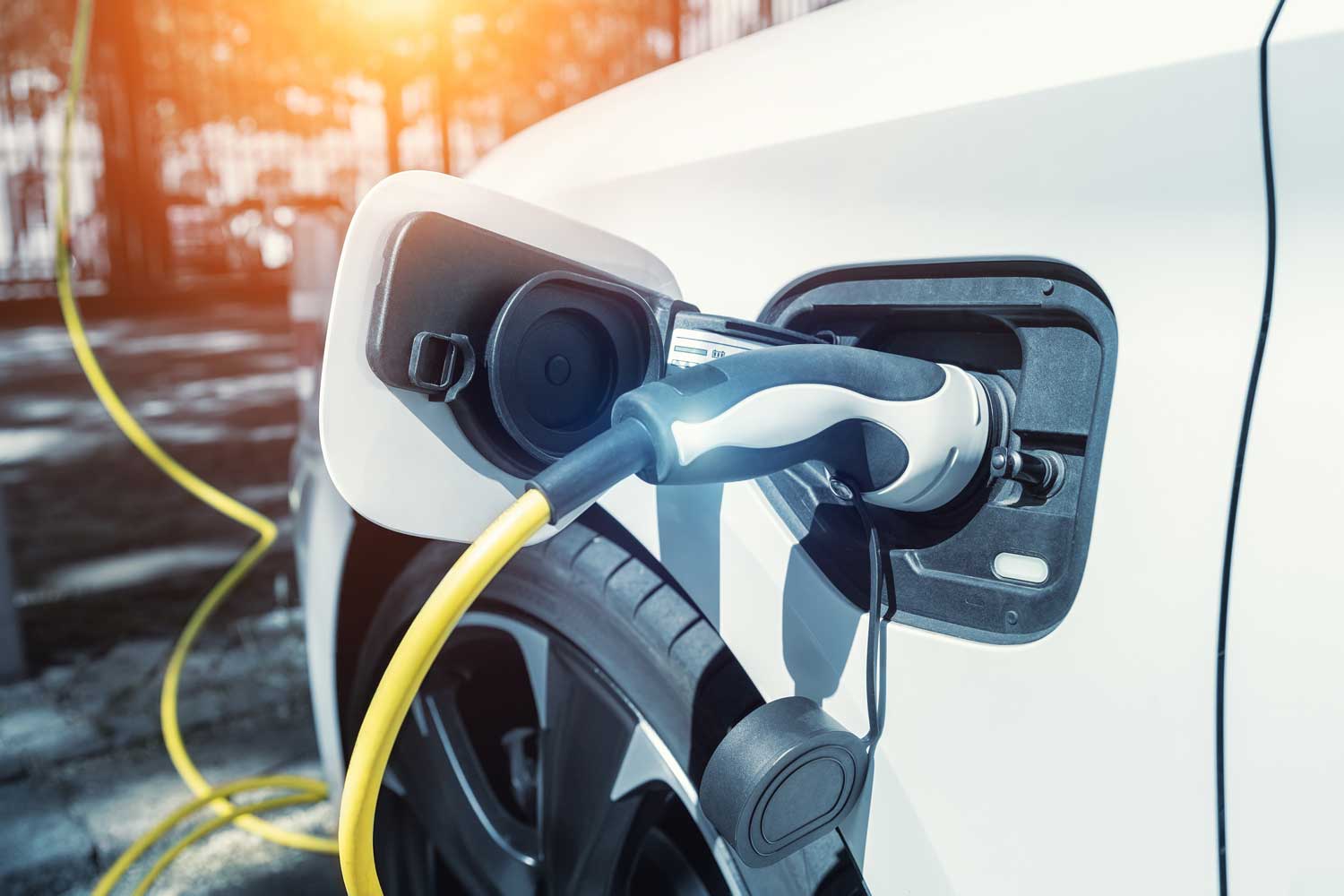
A tethered EV charger cable is permanently attached. The main advantage is convenience. You come home, lift the cable, plug in, and that’s that. No opening the boot, no handling a loose cable in the rain.
That ease is why many homeowners in Ireland prefer tethered chargers.
The trade-off is that you need to choose the EV charging cable length properly at the start. If it’s wrong, you live with it every day.
Untethered chargers
An untethered charger has no fixed cable. You supply your own charging cable for the home charger each time. That gives more flexibility because cable length can vary, and the setup can be changed more easily if the vehicle changes.
But it’s less convenient for daily use. A lot of people like the cleaner look of untethered units, but in wet weather or when charging becomes part of the nightly routine, tethered usually wins on practicality.
There’s no universal right answer. It depends on the house and the homeowner’s preference for type 1 or type 2 connectors. But if someone is choosing tethered for convenience, then getting the cable length right becomes especially important.
The mistakes people make when choosing cable length
Some of the mistakes are very common.
The first is choosing the shortest cable just because it looks neater. That can work, but only if the charger location and parking setup are genuinely simple. Otherwise, the homeowner ends up buying tidiness at the expense of usability.
The second is assuming the current car is the only one that matters. That’s risky. We see plenty of households where the charger ends up being used by a second car later on.
The third is mounting the charger too far from where the car actually sits. This usually happens when the electrical route is prioritised without enough thought given to everyday use.
Another one: not thinking about the parking direction. Nose-in and reverse-in parking can make a surprising difference depending on where the port is.
Another thing installers think about before they start installing the charger on the wall is the cable length.
Our experience shows that we are often asked to review a specification from a site survey in conjunction with the load calculation provided in the sheet of details created by the site surveyor. However, the actual use of a driveway between unprepared concrete pavers on a typical day is what we are able to observe during the site survey and factor into our calculations.
Where does the car normally stop?
Does it reverse in, or drive in front-first?
Is there room to park another car alongside this one.
Unbelievable. A few questions apparently will guarantee you figure out the real length of the cable as opposed to what the charger’s manual says in error.
Two houses on the same street can often require unique garage door openers depending on the specifics of how garages and driveways are configured (e.g., width, how multiple cars are parked, space for car charging, etc.).
We have found that on some models, the EV charging ports are located in different places. Common locations are on the front grille, on the wing below the wing mirror and on the rear wing or door pocket (rear quarter panel). This can add a few metres to the charging cable length required.
We will also consider where on the wall you intend to fix the charger. The easiest electrical connection is not always the most convenient position for charging your car. Moving the charger a few inches to the left or right can make a large difference in terms of how easily the cable reaches into the car.
You may also want to consider future flexibility when choosing your charger. Many people fit their first EV charger as they have a car which needs charging, but in a few years’ time that old car will no longer be required, and you will be driving the latest EV model. Choosing a cable which is long enough to reach your current vehicle but also has sufficient flexibility to manoeuvre around additional future vehicles which will require charging at your home would be wise.
For most Irish people, the choice will be between a 5 metre cable that is long enough to lead from a power outlet to their car while it is parked, and a 7 metre cable which requires a little extra length.
I don’t know that 15 ft is better than 25 ft, but it’s just the right length for this configuration, having the car charged in the driveway rather than having to pull forward to reach around.
We’ve covered the real-world installation costs and key features & benefits of our home EV charging solutions. Today we’ll cover the key point of cable length. Whilst not the most exciting EV charging topic, cable length does have a marked effect on the EV charging experience, both positive and negative.
For many Irish users, the deciding factor will be the location of the charge point in relation to where you park your car. Typically, a 5-meter cable is provided, but some may find a longer cable, such as the 7-meter type shown above, comes in handy from time to time.
The temptation to fit the shortest possible cable to give a neater appearance will bring its own set of problems. While it will be long enough, you will have to park the electric car in exactly the same place every night to ensure it is properly charged.
You want the cord length of the electric car charger to fit the driveway, but not overwhelm the look of the home charger in relation to the house. A good installer can determine the appropriate cable lengths during a walk-through of the driveway, taking into account where a car would actually stop on the curb and the configuration of the garage.
Choosing the right length of EV charger cable in Ireland is something that most people do not even consider until it is too late. Choosing the correct length of electric car charging cable is simple. You just choose an electric car charging cord long enough to allow you to pull up to your driveway and charge as easily as possible.
Related search terms: electric vehicle, charging your electric vehicle, public charging, EV home charger, charge an electric car, charging at home, fast charger, charger installed, charger plug, connector types, Tesla, cable that plugs, attached cable, EV charging cable, single-phase, three-phase, buying an electric car, 5m EV charger cable, 8m EV charger cable, night rate charging, EV charger cable length, home EV charging, EV charger installation, tethered EV charger cable, EV charger cable reach, home EV charging setup
Can You Install an EV Charger Without a Driveway in Ireland? – Check out our latest blog article for details