

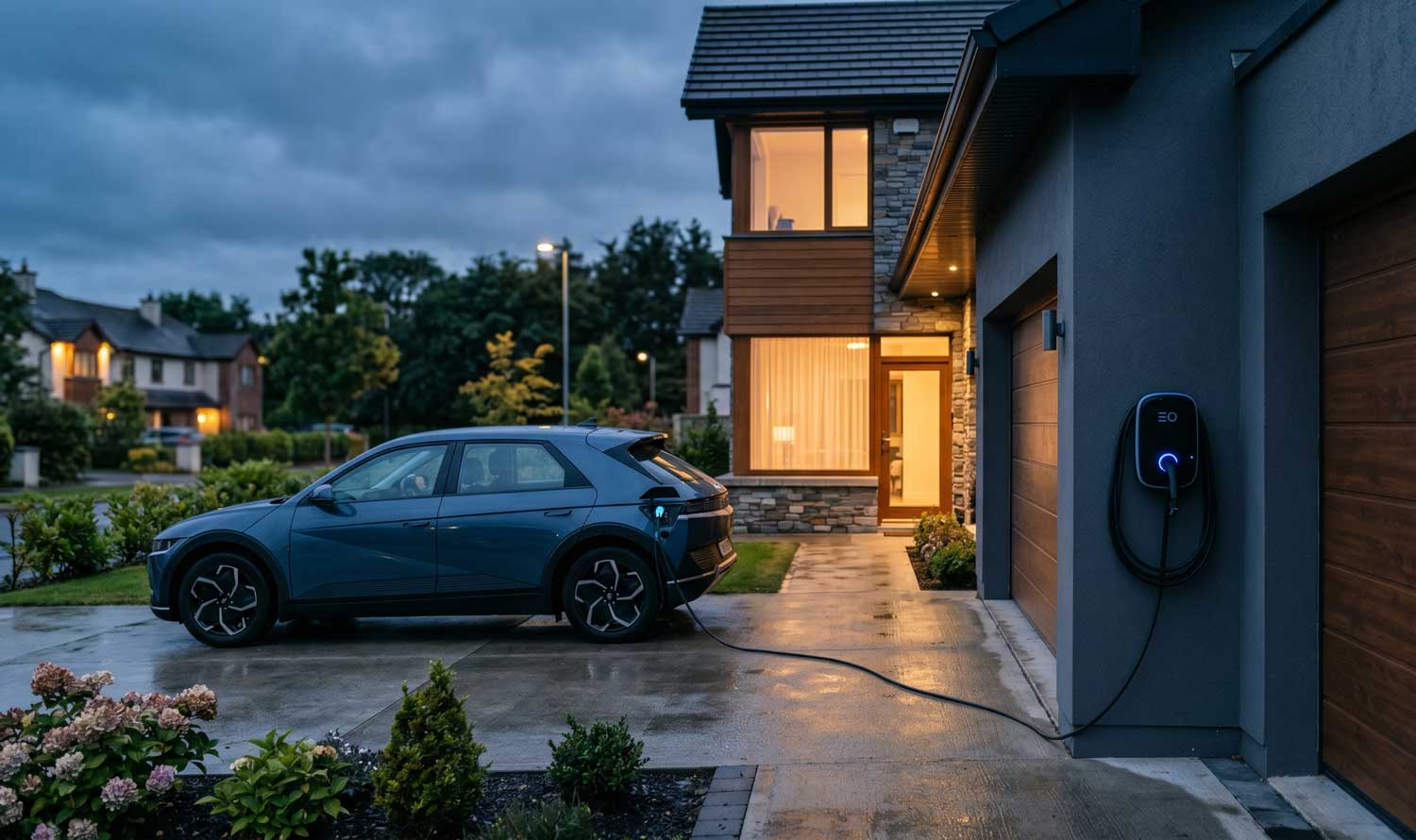
Choosing the best EV charger location at your home in Ireland is more important than you might think. This guide will help you review and make a decision regarding the options for driveway and garage installations, ensuring you make an informed decision for your electric vehicle.
Understanding EV Chargers
What is an EV Charger?
To keep your car supplied with power when at home, you will need an electric vehicle charger. A home EV charger is technically known as Electric Vehicle Supply Equipment (EVSE). and it will be used to supply electricity to the batteries of your electric or plug-in hybrid car, in a similar manner to that of a fuel pump at a service station filling up the fuel tanks of your vehicle. This can be done overnight to have a fully charged car for your next days journey, or it can be done when you return to your car after a journey.
Types of Electric Vehicle Chargers
There are 2 types of home charging points available for Electric Vehicles and these are called Level 1 and Level 2 charging points. Level 1 charging uses a 3 pin plug connected to a 230v electrical supply. These type of chargers are slow to charge the batteries in Electric Vehicles and can take days to fully recharge. Level 2 charging points have a higher power rating, providing 7kW of power, which means they can be recharged much quicker, making Level 2 charging points more suitable for Irish Homeowners, as a quick recharge may be required at anytime.
Importance of Location for EV Charging
Where to Install Home EV Charging
Home EV charging is typically installed in a location that is easily accessible and safe to use. In planning the installation of a home EV charging point for a dedicated electric vehicle or plug-in hybrid electric vehicle the cost of the EV charging point can be affected by the length of cable required, how far it will need to be run to the electrical panel and whether any obstacles need to be overcome. Careful planning of where to install a home EV charging point will ensure that home charging of your vehicle is made easy and hassle-free.
Choosing the Best EV Charger Location
Driveway vs. Garage: Pros and Cons
Deciding between installing an EV charger in your driveway or your garage is something that needs serious consideration. A garage provides weather protection and makes it easier to access the house’s electrical panel. However, a driveway can be more suitable for households with multiple cars and where garage space is a premium. The EV charger can also be exposed to the weather.
Factors to Consider for Charger Installation
Where is your electricity supply? How long will that affect where you can put your home electric car charger? How long will the cable need to be? Are there any obstacles in the way (such as pipes and wires)? Make sure your home electric car charger is easily accessible to your Electric Cars. Lay the charge point cable on the ground flat and make sure it is not strained. Avoid having the cable trip over anything. Future-proof your home by making sure the chosen location can take different sized Electric Cars. Whether you have a Zappi or an Ohme home electric car charger.
Optimal Placement for Charging Efficiency
Installing home EV charging in the most efficient manner possible for your specific situation is key. Installing your home EV charging point in the most suitable location for where you normally park your electric car means you don’t have to move the car regularly.
Therefore, it’s worth thinking carefully about where you normally park your car and how the charging cable will reach the vehicle day to day. A well-positioned home EV charging point makes charging more convenient, helps make better use of the available space, and reduces the risk of cable damage or trip hazards around the property.
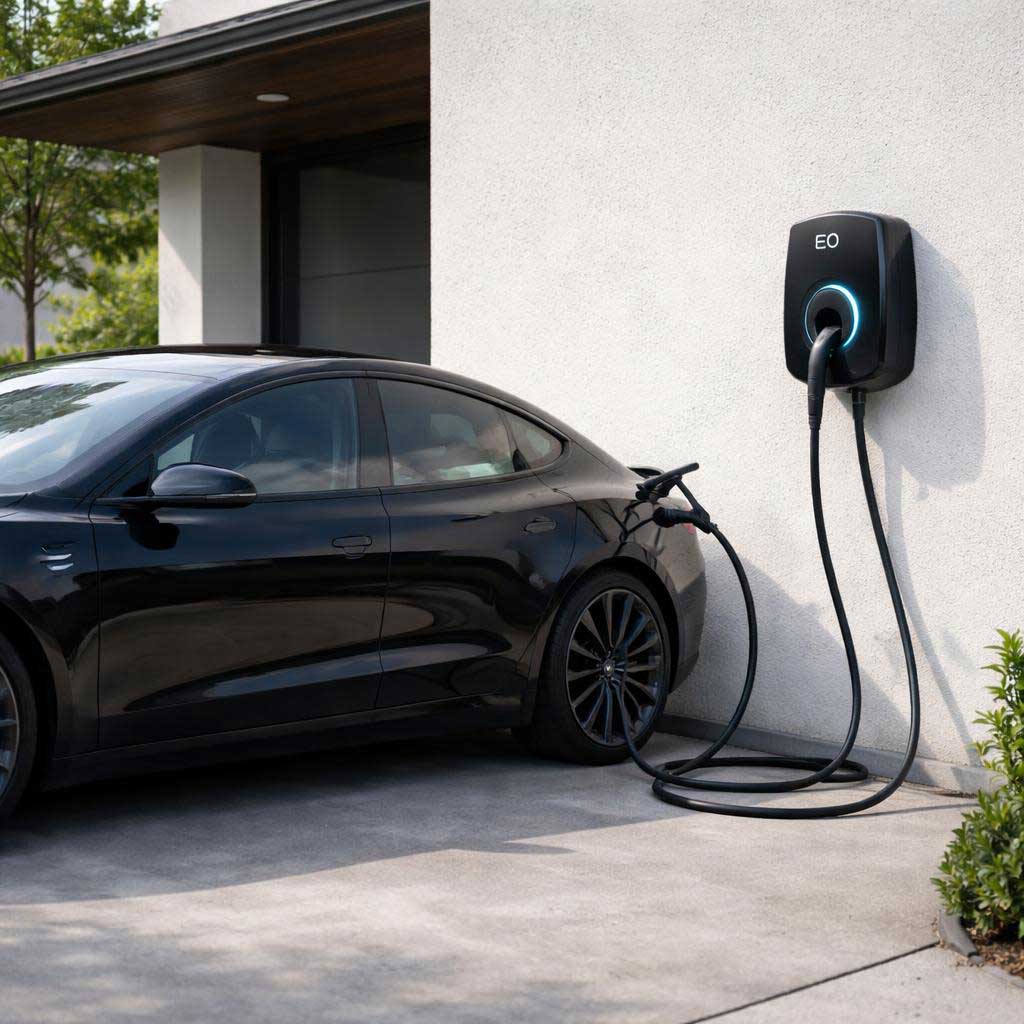
For example, installing a Zappi or Ohme wall charger neatly in the corner of a garage or beside a regular parking position can make everyday charging much easier while keeping the cable safely out of walkways.
Home Charger Installation Process
Steps to Install Your EV Charger
Before installation, a site survey is usually carried out to determine the best location for your home EV charger and to assess whether any upgrades or modifications may be needed to your existing electrical setup.
Most home EV chargers are connected back to the property’s consumer unit, so the installer will also check cable routes, available electrical capacity, and overall installation practicality.
All installation work should be completed in line with current Safe Electric guidelines and carried out by a registered electrical contractor.
Once the charger has been installed — typically a 7kW home charger for most Irish homes — the system will be tested and commissioned, and you’ll be shown how to safely use and manage the charger on a day-to-day basis.
Using SEAI Grants for Home Charger Installation
Sustainable Energy Authority of Ireland currently offers a Home Charger Grant to help support the cost of purchasing and installing a home electric car charger in Ireland.
The grant is available to eligible EV owners and has helped make home charging far more affordable for many households making the switch to electric driving.
If you’re considering installing a home EV charger, it’s important to choose an eligible charger and use a registered installer who meets the grant requirements. Your installer can usually guide you through the process and explain what documentation is needed when applying for the grant.
Charging Times and Speeds
Understanding Charging Speed Options
We provide information regarding your charging speed options when choosing an electric car charger for home installation in Ireland. Level 1, standard charging using a plug and cable attached to the car’s socket is supplied with the car, but it is a very slow way of charging. Even when charging your car while away from home using public EV charging points, it will add a few kilometres of range per hour of charge, which for a large battery pack would mean a full charge would take 24 hours or more.
How to Maximise Charging Efficiency at Home
Try to park your car as close as possible to the charging point in order to avoid cable loss. By using a smart home charger, such as a Zappi or an Ohme, you can program your charger to charge your car at the lowest off-peak electricity rate. By monitoring your normal usage pattern, you can get to grips with the amount of electricity that your car is using and look for ways to reduce it.
Comparative Analysis of Charging Times
When looking at the charging time for Electric or Hybrid cars for home charging, most of the chargers used in homes in Ireland are 7kW Level 2 chargers. They will charge up the average car overnight to full power. Charging time for a Level 2 charger for a car will take between 6-8 hours to fully charge. This is in stark contrast to Level 1 charging. Level 1 chargers are simply using the standard 3-pin plug fitted to public charging points. These can take in excess of 24 hours to fully charge a car, but some advanced Level 2 chargers also now offer charging in kW to charge up your EV as quickly as possible.
Future of EV Charging in Ireland
Trends in Electric Vehicle Adoption
Electric vehicle adoption in Ireland has continued to grow steadily over recent years, with more drivers making the switch away from traditional petrol and diesel cars.
Greater awareness around running costs, environmental benefits, and improvements in charging infrastructure have all contributed to the rise in EV ownership across the country.
Government supports, such as the Sustainable Energy Authority of Ireland Home Charger Grant, have also helped make home EV charging more accessible for Irish homeowners considering the move to electric driving.
Electric vehicles are also becoming increasingly popular because they can be significantly cheaper to run and maintain compared to traditional petrol or diesel cars.
For most EV owners, home charging remains the most convenient way to keep the vehicle charged day to day, particularly with overnight charging and lower off-peak electricity rates available from many energy providers.
Because of that, demand for reliable home EV chargers and well-planned charger installations is expected to continue growing across Ireland.
The Role of Public Charging Stations
But even for most journeys, the car will be used for a number of days in between charges, and for longer journeys, or when the owner of the vehicle does not have the opportunity to install a private EV charger at their home, there will be occasions when the owner will use Public Charging Points. And the support of electric vehicles in Ireland will be greatly enhanced by the growing number of Public Charging Points, including standard AC charging points as well as a growing number of rapid DC charging points, allowing for all users of electric vehicles to ‘top up’ on the go, wherever they are on the island of Ireland.
Innovations in Home Charging Solutions
Home EV charging solutions for Electric Vehicles have come a long way in recent years, and the latest smart home EV chargers, such as the Ev Charge Solutions Zappi and the Ohme Home EV Charger can even integrate with your home energy management system. This means that if you have solar panels on your home, you can use the energy you have generated to charge your Electric Vehicle. The future of the electric car charger in Ireland will bring some of the fastest charging times on the market, the most innovative smart features on the market and most importantly of all, the widest accessibility of any product on the market. All reasons to charge your Electric Vehicle at home.
Related keyword terms: charge your EV, charging an electric vehicle, electric vehicle home charger, EV home charger Ireland, best EV charger location home Ireland, home EV charging, EV charger installation Ireland, charger installed, installation of a home charger, home charger installed, charger at home, home charger unit, EV charger location, driveway EV charger, garage EV charger, EV charger driveway installation, EV charger garage installation, EV charging at home, charging at home, overnight charging, faster charging, power output of the charger, 7kW EV charger, smart EV charger, tethered EV charger, untethered chargers, Zappi charger, Ohme charger, EV battery, charge your vehicle, charging experience, electric driving, electric vehicle charging, electric car charger, electric car charging Ireland, electric vehicle supply equipment, EVSE, EV charging cable, charging cable length, off-street parking, EV charger positioning, EV charger site survey, electrical panel, consumer unit, renewable energy, solar charging, solar EV charging, sustainable energy, energy use, electricity bill, charging infrastructure, EV charger grant Ireland, electric vehicle home charger grant, SEAI home charger grant, SEAI EV grant, Safe Electric Ireland, electrical installation, electrical contractor, DC charger, AC charging, rapid charging, public charging points, vehicle type, plug-in hybrid charging, EV ownership Ireland, EV charging solutions, EV charger safety, EV charging efficiency, EV charging speed, EV charger planning, EV charger setup, EV charging installation costs, EV charger cable management, EV charging access, EV charging convenience, EV charging technology, charging point installation, EV charging options, electric vehicle adoption Ireland, EV charging network Ireland, across the island of Ireland